The HealthGene SDMA ELISA Test measures Symmetric Dimethylarginine (SDMA), a highly sensitive biomarker of renal function that supports the early assessment and ongoing monitoring of kidney health in both cats and dogs.
SDMA is released during normal cellular protein metabolism and is eliminated almost exclusively by the kidneys through glomerular filtration. As kidney function declines and glomerular filtration rate (GFR) decreases, SDMA concentrations increase in the bloodstream, making it a valuable indicator of reduced renal function.
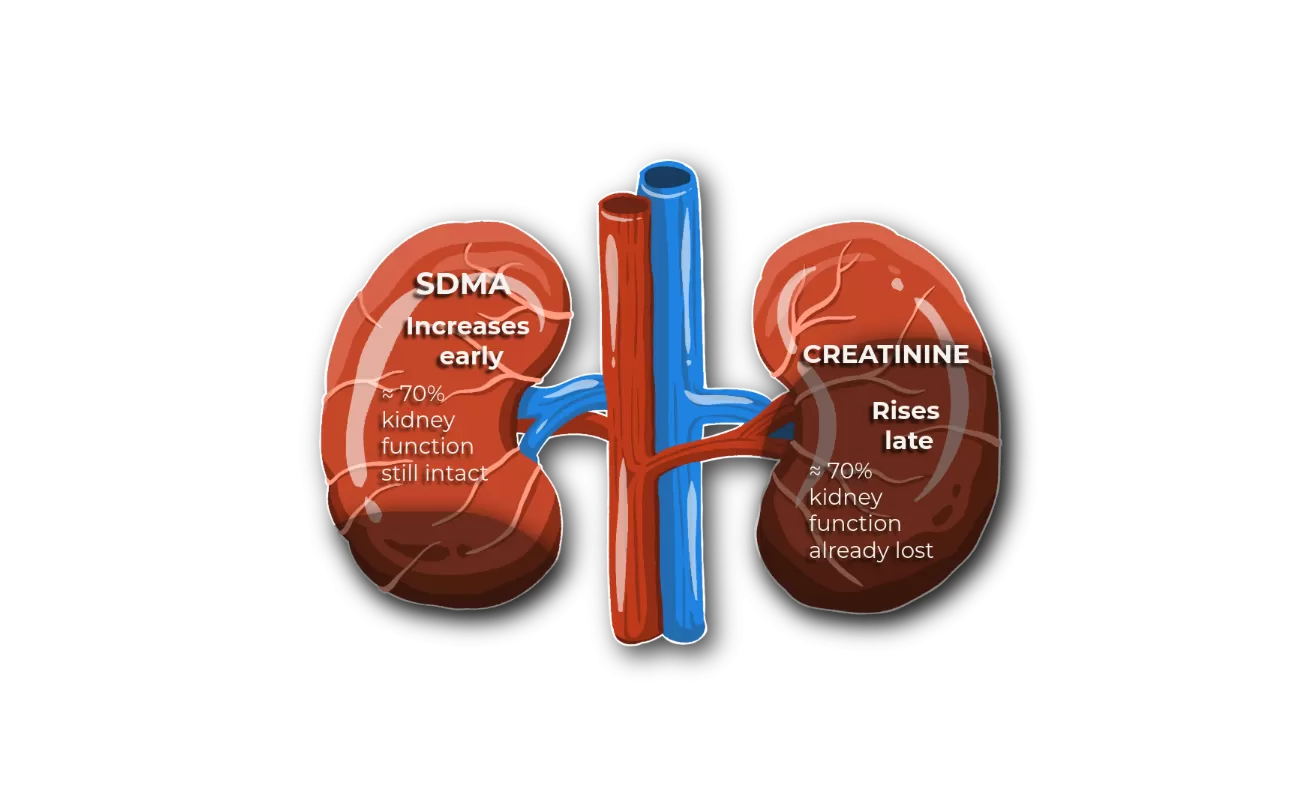
Unlike serum creatinine, which may remain within the reference interval during the early stages of kidney dysfunction, SDMA may increase earlier as GFR declines, allowing veterinarians to recognize changes in renal function sooner and initiate additional diagnostic evaluation and patient management when appropriate.
Chronic Kidney Disease (CKD) is one of the most common chronic diseases affecting companion animals, particularly senior cats and aging dogs. Because clinical signs often develop gradually, early kidney dysfunction may go unnoticed until substantial loss of renal function has occurred.
Routine measurement of SDMA provides veterinarians with an additional tool for evaluating kidney function before significant biochemical changes are observed using traditional markers alone.
Early assessment of kidney function may support:
Symmetric Dimethylarginine (SDMA) is a naturally occurring methylated amino acid produced during normal intracellular protein turnover.
Following release into the bloodstream, SDMA is eliminated primarily by renal filtration with minimal metabolism elsewhere in the body. Because its concentration closely reflects glomerular filtration rate (GFR), SDMA serves as a sensitive biomarker of kidney function.
Unlike many traditional laboratory markers, SDMA is generally less influenced by lean body mass, making it particularly useful when evaluating patients with reduced muscle condition.
Glomerular Filtration Rate (GFR) represents the kidneys' ability to filter blood and remove metabolic waste products from the body. It is widely regarded as the best overall indicator of renal function.
Direct measurement of GFR requires specialized procedures that are often impractical in routine clinical practice. SDMA provides a practical laboratory biomarker that closely reflects changes in GFR and supports routine assessment of kidney function in veterinary patients.
Serum creatinine has long been used to evaluate kidney function; however, creatinine concentrations may be influenced by several physiological factors unrelated to renal disease.
Creatinine may be affected by:
As a result, animals with reduced muscle mass, chronic illness, or cachexia may have serum creatinine concentrations that underestimate the degree of renal dysfunction.
SDMA is considerably less influenced by muscle mass and may increase earlier than creatinine as glomerular filtration rate declines, making it a valuable complementary biomarker for assessing renal function.
For the most accurate clinical assessment, SDMA and creatinine should always be interpreted together.
The HealthGene SDMA ELISA Test may be considered for:
Consider SDMA testing in patients presenting with:
✓ Sensitive assessment of kidney function
✓ Supports early recognition of reduced glomerular filtration rate (GFR)
✓ Less influenced by lean body mass than serum creatinine
✓ Valuable for both feline and canine patients
✓ Useful for wellness screening and long-term monitoring
✓ Complements traditional renal chemistry testing
✓ Rapid, reliable ELISA methodology
✓ Convenient serum-based testing
SDMA should not be interpreted as a standalone diagnostic marker.
The greatest clinical value is achieved when SDMA is evaluated together with other indicators of renal function, including:
This integrated approach provides a more comprehensive evaluation of kidney health and supports accurate diagnosis, disease staging, and patient monitoring.
The HealthGene SDMA assay utilizes a validated Enzyme-Linked Immunosorbent Assay (ELISA) specifically developed for veterinary diagnostic use.
Compared with highly specialized analytical methods such as HPLC or LC-MS/MS, ELISA offers:
An elevated SDMA concentration suggests a reduction in glomerular filtration rate (GFR) and should prompt further clinical evaluation.
Because SDMA reflects kidney function rather than a specific disease, results should always be interpreted alongside:
Serial SDMA measurements are often more informative than a single isolated result and may assist in monitoring disease progression or response to treatment.
No. SDMA is a biomarker of kidney function rather than a diagnostic test for CKD. A diagnosis of chronic kidney disease requires interpretation of SDMA together with serum chemistry, urinalysis, blood pressure, diagnostic imaging, and the patient's clinical findings.
SDMA and creatinine provide complementary clinical information. SDMA is generally less affected by lean body mass and may increase earlier as kidney function declines, while creatinine remains an important marker for evaluating renal function and monitoring disease progression.
SDMA testing is particularly valuable for:
The HealthGene SDMA ELISA Test provides veterinarians with a dependable and practical laboratory solution for assessing kidney function in companion animals. By combining sensitive SDMA measurement with traditional renal biomarkers, clinicians gain a more comprehensive understanding of renal health, supporting earlier recognition of declining kidney function, improved patient monitoring, and informed clinical decision-making throughout the course of kidney disease.